Most Cincinnati homeowners would pay less in property taxes under a proposal to tax land at a higher rate than buildings, according to a report published in July 2026 by the University of Notre Dame's Student Policy Network and the Center for Land Economics.
The catch: the report found the highest-income quintile of neighborhoods would face a median tax increase of about 11% per parcel. Hyde Park, Oakley, and Mount Lookout had a combined 2023 residential market value exceeding $5 billion, according to Hamilton County Auditor records, placing them in the city's highest-value tier. The report does not break out results by specific neighborhood, so exactly where local homeowners would land remains unclear.
Not legal yet
A split-rate property tax is not legal for Ohio municipalities under current state law. State Sen. Bill Blessing, a Colerain Township Republican, introduced Senate Joint Resolution 7 on October 21, 2025, proposing a constitutional amendment to let jurisdictions adopt a land value tax. The resolution was referred to the Senate General Government Committee the next day and has seen no further action.
Blessing told WVXU the measure is unlikely to advance before the 136th General Assembly ends in December 2026. He plans to reintroduce it next session. Three-fifths of both legislative chambers would need to approve the amendment before it could go to Ohio voters.
What the report proposes
The study, titled "From the Ground Up," modeled a scenario in which Cincinnati taxes land at four times the rate of buildings under the city's 6.1-mill general operating levy (one mill equals $1 of tax per $1,000 of taxable value). The city would collect the same total revenue. The shift changes who pays, not how much.
Researchers identified nearly 17,000 vacant parcels and about 8,000 underdeveloped parcels citywide, representing $1.87 billion in taxable land value. Vacant lots would see a median tax increase of about 126%.
Neighborhoods in the lowest two income quintiles would see median tax cuts of approximately 17%. Middle-income neighborhoods would see reductions of 10% to 11%. About two-thirds of multi-family parcels would see tax cuts above 10%.
"The current winners of our property tax system, which taxes buildings and land together, are the people who build less, particularly the vacant landowner," Greg Miller, executive director of the Center for Land Economics, told WVXU. "We have vacant lots sitting right next to housing, and the housing is paying 10 times more."
Jeffreys interested but cautious
Cincinnati City Council member Mark Jeffreys, chair of the Housing and Growth Committee, told WVXU he likes the concept in theory but wants to understand the broader implications before the city acts.
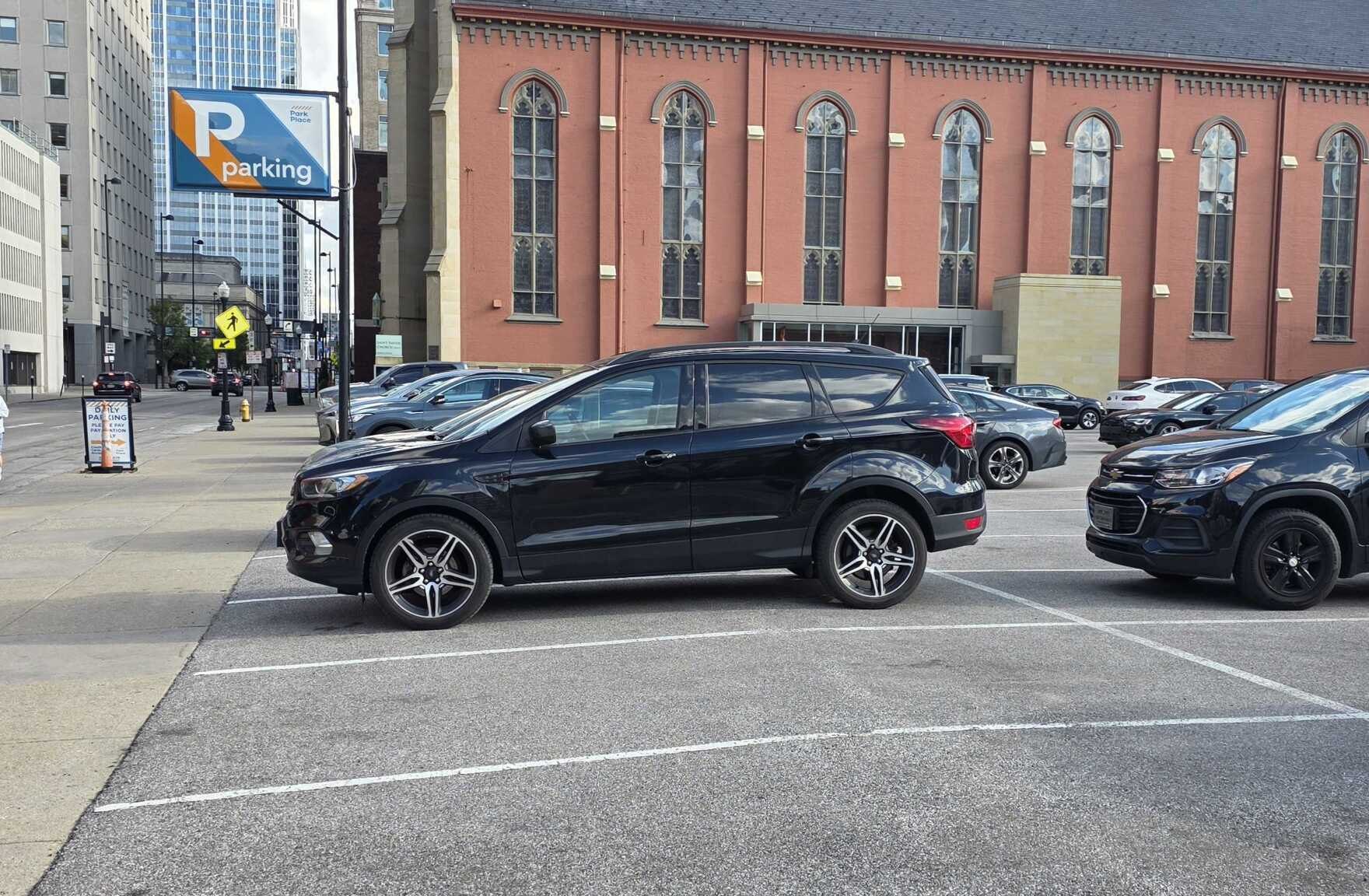
Jeffreys pointed to surface parking lots as an example of land that generates little revenue relative to its value. He said the city needs to weigh how a split-rate tax would interact with existing incentives, abatements, and the full property tax ecosystem.
No council hearing or committee vote on a land value tax has been scheduled. Blessing said he plans to reintroduce the constitutional amendment in the next legislative session beginning in January 2027.