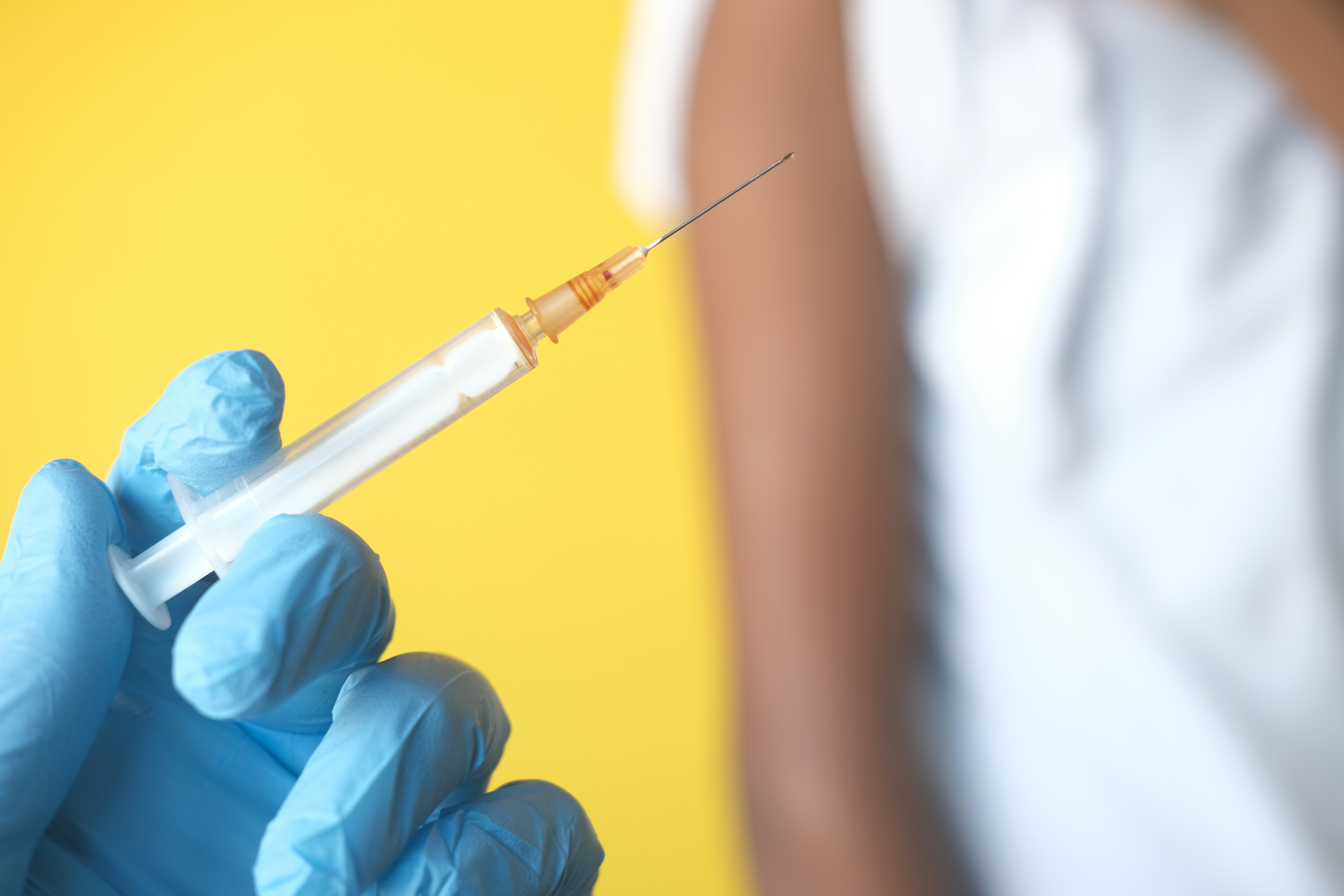
Ohio's school vaccination requirements haven't changed, but with Cincinnati Public Schools classes starting Aug. 19, local health officials and a Cincinnati pediatrician are urging east-side families to confirm their children's immunization records now, before a new federal executive order muddies the picture.
President Trump signed the order Aug. 10, calling for a major overhaul of childhood vaccine recommendations. It recognizes only 11 "core" vaccinations as a "gold standard," proposes separating the combined measles, mumps and rubella (MMR) shot into three individual vaccines, and directs that childhood immunizations be given at separate medical visits rather than bundled into one appointment.
None of that changes what Kilgour, Clark Montessori or Withrow families need to do this month.
"As of now, this is an executive order. So as of now, nothing is changing," Dr. Kristen Dinkelacker, a pediatrician with West Side Pediatrics, told WLWT. "Your school-required vaccines are not changing. What your pediatrician is recommending is not changing."
States, not the federal government, set school vaccination mandates. The order advises states to consider updating their laws to reflect the administration's preferred schedule but cannot compel them to do so. Ohio and Kentucky mandates remain in effect.
Practical risks of splitting vaccines
Dinkelacker said the risks of splitting vaccines across multiple appointments are real. Requiring extra visits raises costs, adds scheduling hassles and increases the chance a busy parent misses a dose. Separate measles, mumps and rubella vaccines are not currently manufactured in the United States, making the MMR-splitting proposal impossible to implement immediately.
Her practice has seen more vaccine refusal and more parents requesting alternative schedules over the past year. Some parents are now seeking early measles vaccination for infants out of fear of exposure, something Dinkelacker said she had not encountered earlier in her career.
The American Academy of Pediatrics called the order disheartening and dangerous in a statement, noting measles cases have reached a 35-year high nationally. AAP president Dr. Andrew Racine said the announcement spreads "uncertainty, fear and confusion" and that no new science justifies the changes.
Local numbers add urgency
U.S. measles cases hit 2,371 as of July 31, surpassing the full 2025 total of 2,289, according to Healthline, citing the Johns Hopkins U.S. Measles Tracker. About 93% involved unvaccinated individuals. Ohio reported 15 measles cases so far in 2026, with an active outbreak in the northeast part of the state, after 45 cases statewide in 2025.
Closer to home, state dashboard data analyzed by the Cincinnati Enquirer in May showed just 23% of CPS kindergartners appeared fully vaccinated, the lowest rate among Ohio public school districts. CPS officials and Dr. Stephen Feagins, medical director of Hamilton County Public Health, attributed the figure to documentation gaps rather than actual under-vaccination. But Feagins warned that in a measles outbreak, any child without documentation would be assumed unvaccinated and pulled from school for 21 days.
The CPS Policy and Equity Committee reviewed the district's immunization policy at its June 5 meeting, placing the Enquirer report on its agenda alongside Policy 5320 on immunization.
What families should do now
Hamilton County Public Health, the Cincinnati Health Department and the Northern Kentucky Health Department are urging families to verify children are current on all routine immunizations, covering measles, mumps, rubella, pertussis, polio, hepatitis, diphtheria, tetanus, meningococcal disease and varicella. The Cincinnati Health Department operates health centers in 24 CPS schools offering low- or no-cost vaccinations regardless of insurance status.
CPS's first day of classes is Aug. 19.