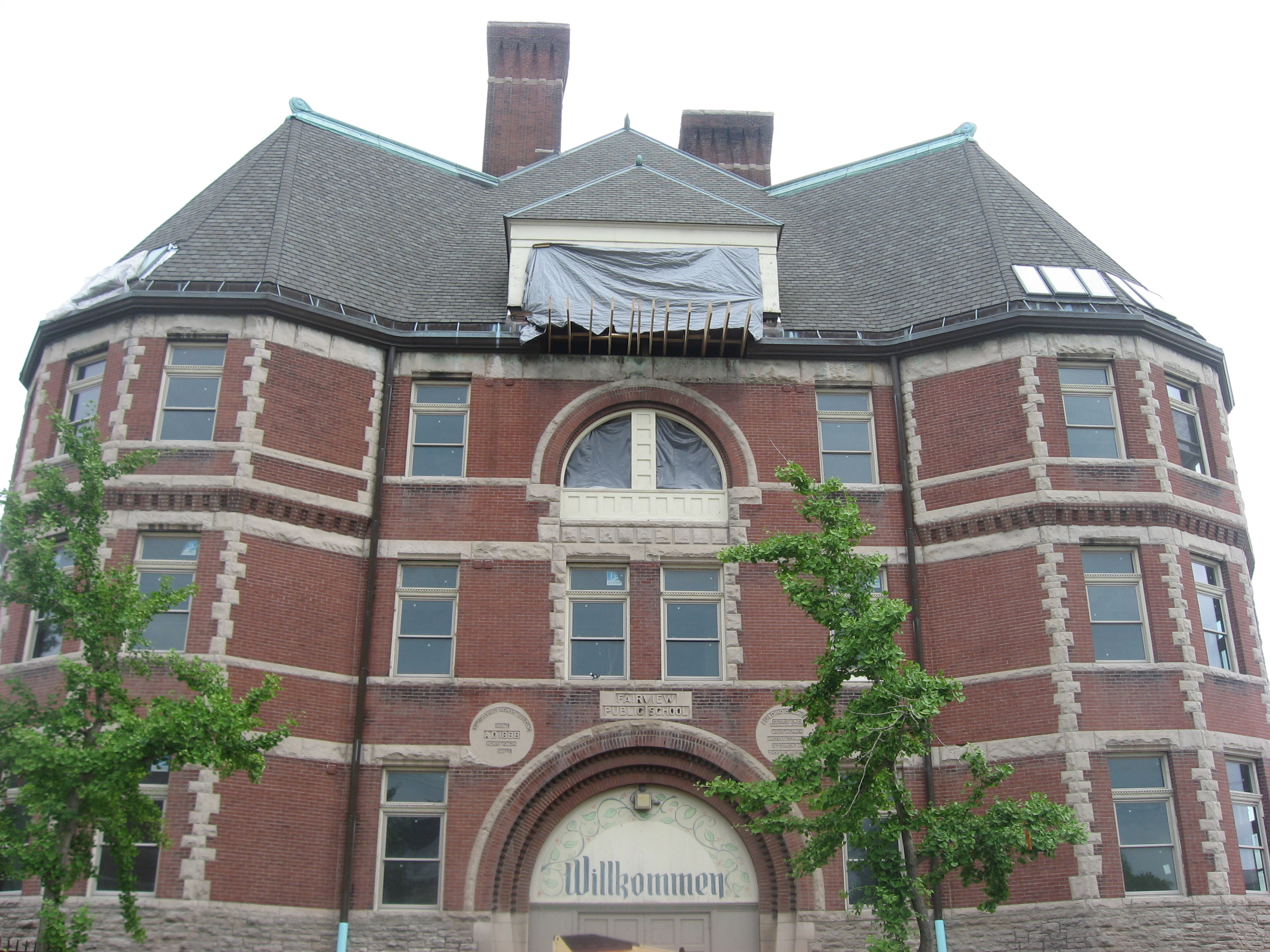
Clark Montessori families still don't know exactly how much of Cincinnati Public Schools' proposed $74 million annual levy would flow to their building. And with fewer than 100 days until the Tuesday, November 3 vote, community advocates say the district is running out of time to answer that question.
The CPS Board of Education voted 5-2 on Monday, July 27, to place a five-year, 0.75% earned income tax on the November ballot. As we reported July 27, the levy marks the first time in district history that CPS has pursued an income tax instead of a traditional property tax levy.
The district's own press release names Montessori programs, magnet schools, career and technical education, arts, athletics, and transportation among the services the money would sustain. If the levy fails, CPS officials say they may consolidate schools, cut student transportation, and impose pay-to-play fees for extracurriculars, according to Fox 19.
That's the broad picture.
What parents at the July 27 meeting wanted was a line-item breakdown.
'Where is the money going?'
Christian Davis, founder of the Cincinnati Parent Empowerment Network, said at the meeting that the district faces a deep trust gap with the community rooted in a lack of financial transparency. She said CPS has roughly 99 days to open its books and build public confidence before the election.
"It's really gonna boil down to can the district gain the confidence from the community in less than 100 days," Davis said at the July 27 meeting, as reported by WCPO.
Avondale parent Carlos Davis echoed that demand, asking where levy dollars would go school by school. He also raised concerns about the removal of school-based therapists, saying many students depend on those professionals as their only source of emotional support.
Even board members who voted yes acknowledged the gap. Board Vice President Dr. Kareem Moncree-Moffett said at the same meeting that the district had not provided a sufficiently specific plan explaining how levy proceeds would be allocated. Board member Kendra Mapp, also a yes vote, said, "There needs to be more engagement from the community."
Board members Eve Bolton and Ben Lindy cast the two no votes. Bolton called the levy "a big ask" in difficult financial times.
What it costs and what's at stake
For a household earning $54,500, the district average, the levy would cost about $408 per year, according to Local 12. A $100,000 earner would pay $750 annually. The tax applies only to residents living within the CPS district and does not hit pensions, Social Security, or investment income. If voters approve it, the board has also passed a resolution providing a 1% rollback on property taxes.
The financial pressure is real. At a June 22 meeting, CPS cut 111 positions, including 12 social workers, 10 assistant principals, and eight counselors, and imposed five mandatory unpaid days on teachers, counselors, and social workers, according to WLWT. CPS Treasurer Mike Gustin has said the district closed a nearly $58 million projected gap to balance a $634.6 million budget for 2026-27, but one-time measures cannot solve an ongoing revenue shortfall.
Board President Brandon Craig said further cuts would directly hit students. "We don't have pens and paper and paper clips to take out of our budget," Craig said at the July 27 meeting. "What we have are staff."
The levy faces headwinds beyond the transparency debate. Of 32 school income tax issues on Ohio ballots during the May 2026 election, 24 failed, according to the Ohio School Boards Association. Hamilton County Republican Party Chairman Josh Gerth said the party will oppose the measure, calling it "offensive" and citing the district's absenteeism rate, per WCPO.
The levy appears on the Tuesday, November 3 general election ballot. Craig said a separate community campaign effort would be organized to inform residents ahead of the vote.