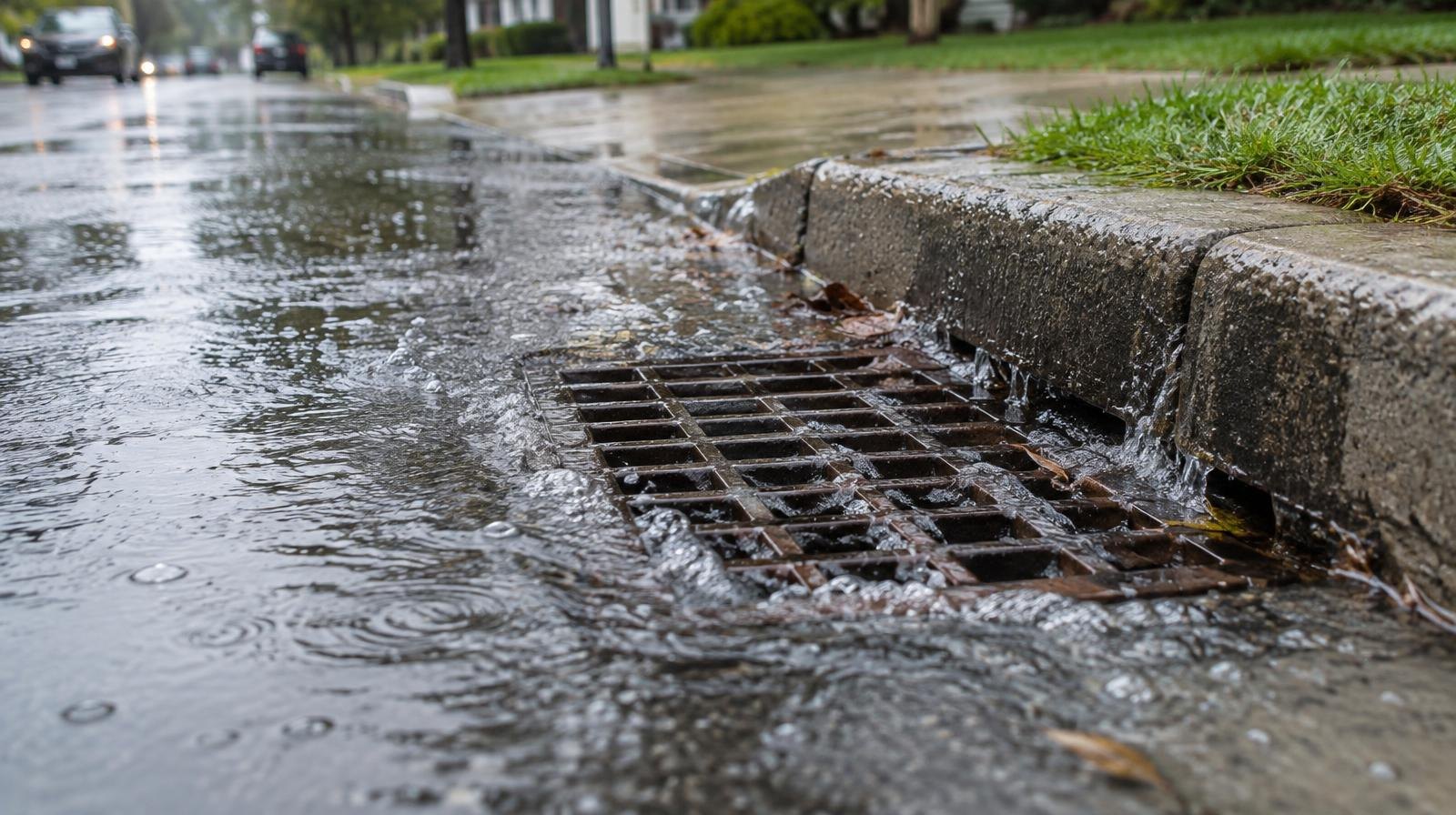
A broken floodgate and overwhelmed sewers sent raw sewage into roughly 1,200 basements across Hyde Park and Mount Lookout after a July 17 storm. Six weeks later, the city's east-side infrastructure remains under intense scrutiny.
On Aug. 27, former Cincinnati City Council member and attorney Steve Goodin wrote in the Cincinnati Enquirer that Mayor Aftab Pureval is chasing national media attention while neighborhood infrastructure crumbles. Goodin called the flooding evidence of "the city's derelict maintenance of the Duck Creek floodgate."
The floodgate, though, was only part of the problem.
The Madison Road floodgate at Duck Creek, near the Oakley-Madisonville line, failed to close automatically during the July 17 storm because of a mechanical malfunction, City Manager Sheryl Long confirmed at a July 23 press conference. The gate could only be closed manually at the time. Long said the failure affected about 40 homes and businesses near the bridge, but the volume of rain still would have caused major problems even if the gate had worked.
The broader damage came from the combined sewer system being overwhelmed by five to six inches of rain in one hour. The Metropolitan Sewer District received nearly 2,000 reports of water intrusion. About 1,200 were officially classified as sewer backups, according to WVXU. One person died from electrocution during the storm, and emergency crews conducted at least 40 water rescues.
The floodgate was built by the U.S. Army Corps of Engineers in 2008 and turned over to Cincinnati for maintenance in 2012. Greater Cincinnati Water Works Deputy Director Jason Fleming told a City Council committee on Aug. 4 that the gate's automatic sensor system had been repaired and returned to automatic mode. He said the city was testing it three times per week and conducting a full closure every two weeks.
A 2020 city-commissioned study recommended replacing the Madison Road bridge and eliminating the floodgate entirely. The city determined the project was too expensive because it would require rearranging private property, roads and railroad infrastructure, the Cincinnati Enquirer reported.
The storm's toll extended beyond basements. Multiple Hyde Park and Mount Lookout businesses closed after the flooding. Neko Sushi owner Yeon Kim told WCPO it was the fifth time her restaurant had flooded since 2018. Poeme owner Kristen Folzenlogen said water came up through her basement floor within seconds.
"Our sewage systems can't handle this type of density in such a short period of time, and I hope the City of Cincinnati starts to pay attention," Folzenlogen told WCPO on July 18.
Hamilton County's damage assessment found the flooding did not meet the federal threshold for disaster aid. That standard requires 25 properties with major damage or destruction; only eight Cincinnati properties and one in Fairfax qualified. Assistant Cincinnati Fire Chief Matthew Flagler said the actual impact was far higher, with thousands of properties affected.
City Council responded unanimously in early August, doubling the city's emergency flood relief fund to $2 million. That $2 million included $1 million his administration had already directed. Council also directed the city and MSD to explore green infrastructure, watershed-based flood planning and creation of a Flood Resilience Task Force. A separate motion from Councilman Mark Jeffreys calls for a 30-day after-action review, a 60-day deeper review of stormwater solutions and watershed studies for both Mill Creek and Duck Creek, FOX19 reported.
John Menninger, speaking for the Hyde Park Neighborhood Council at the committee hearing, told council members the July 17 event was not the first time east-side neighborhoods had flooded, pointing to major storms in 2016, 2021 and 2024.
Mayor Pureval wrote on X on July 23 that the floodgate failure was "on the City" and pledged accountability. His administration directed $1 million from existing small-business funds for affected business owners, according to WVXU. The city also activated a flood relief hotline for residents who had not yet contacted MSD, WLWT reported.
Council's flood mitigation motion requires a report within 120 days with recommendations, cost estimates and potential funding sources. That deadline falls around early December.