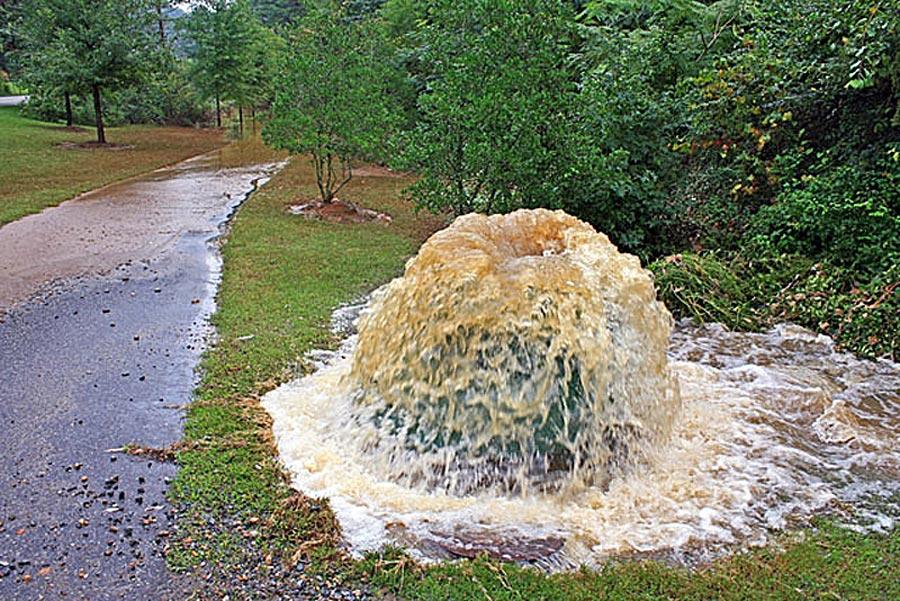
Two storms in five days generated more than 1,000 reports of sewer backups and flooded basements across Hyde Park, Oakley, and Mount Lookout, and city leaders are pressing for answers about why existing infrastructure failed and what can be done before a long-term stormwater master plan is finished.
City Council member Mark Jeffreys and University of Cincinnati environmental engineering professor Patrick Ray appeared on WVXU's Cincinnati Edition on Thursday, July 23, to discuss the flood damage, the city's response, and how Cincinnati should adapt its civil engineering for intensifying storms. Ray, who holds the UNESCO chair on water and climate change, studies flood risk management and has advised on how cities adapt infrastructure to extreme rainfall.
No formal infrastructure redesign proposal or City Council vote has been scheduled. The stormwater master plan Jeffreys referenced is in progress, but no public timeline or completion date has been announced.
Jeffreys told WLWT on July 20, that the master plan is "great for the long term," but pressed the question: "What can we do between now and when that plan is implemented?"
What happened
The National Weather Service estimated that between 5 and 6 inches of rain fell on the east side in roughly one hour on July 17. City Manager Sheryl Long's July 21 memo to Mayor Aftab Pureval and Council called it a 1,000-year storm. Long's memo stated that no modern sewer system is designed to handle rainfall of that magnitude. The Metropolitan Sewer District received more than 1,000 reports of sewer backups and flooded basements from that single night.
Then it happened again. A second round of storms hit Oakley, Hyde Park, and Madisonville on July 21, re-flooding properties still being cleaned up from Friday.
Emergency declaration and funding
Mayor Pureval issued a declaration of emergency on July 22, in place through no later than September 15. The declaration authorizes City Manager Long to pursue state and federal disaster assistance under Section 13 of Cincinnati's municipal code. Pureval said on July 21 that the order "provides our City Government the ability to move quickly as needed, and importantly, allows us to pursue further support at the state and federal level."
Pureval said the city is developing a grant fund for residents and businesses recovering from the floods, though no dollar amount or eligibility details have been released.
Residents and businesses feel the pressure
The damage is not abstract. Neko Sushi owner Yeon Kim told WCPO 9 that her restaurant near Hyde Park Square flooded for the fifth time since 2018. Poeme stationery store owner Kristen Folzenlogen warned on July 18, that a planned development near the square sits "exactly where this extensive flooding occurred" and urged the city, the Hyde Park Neighborhood Council, and the developer to solve the drainage problem before breaking ground.
Council member Seth Walsh echoed those frustrations on July 20, asking why past infrastructure work hasn't improved outcomes: "Why have we done a lot of work in some of these neighborhoods, and it doesn't seem like things are getting better?"
What comes next
City officials are still investigating whether a flood gate on Duck Creek near Madison Road in Oakley malfunctioned during the July 17 storm; the city is working with the U.S. Army Corps of Engineers on that review.
Residents can file MSD Sewer Backup Program claims by calling 513-352-4900 or visiting msdgc.org. The Hyde Park Neighborhood Council urged residents to file within 48 hours of flooding.